Fallow deer
Fallow deer
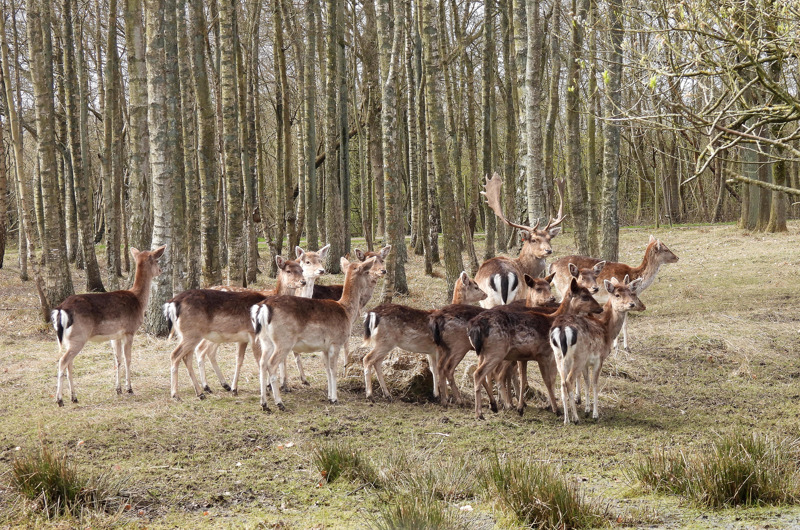
Did you know that the fallow deer, which is the second largest species of deer in Denmark and the largest on Lolland and Falster, is not what we call a native species? Native means that the species arrived on its own and occurs naturally. The fallow deer became extinct in Denmark around 250,000 years ago, but it was reintroduced during the early Middle Ages, in what we call the Viking Age, as a hunting and ornamental animal. Today, fallow deer live freely in many natural areas, especially in eastern Denmark in and around open, light woodland.
You can recognise the fallow deer by comparing it to its smaller cousin, the roe deer – by its size and by its rump, known as the “mirror”. The fallow deer has three black stripes on a white background, making it look as if the number 111 is written on its rear.
If you want a chance to see the fallow buck with its magnificent antlers, you should visit the forest between August and May. Fallow deer are most active during daylight hours, at times when they are not disturbed – early in the morning or late in the evening.