Grass snake
Grass snake
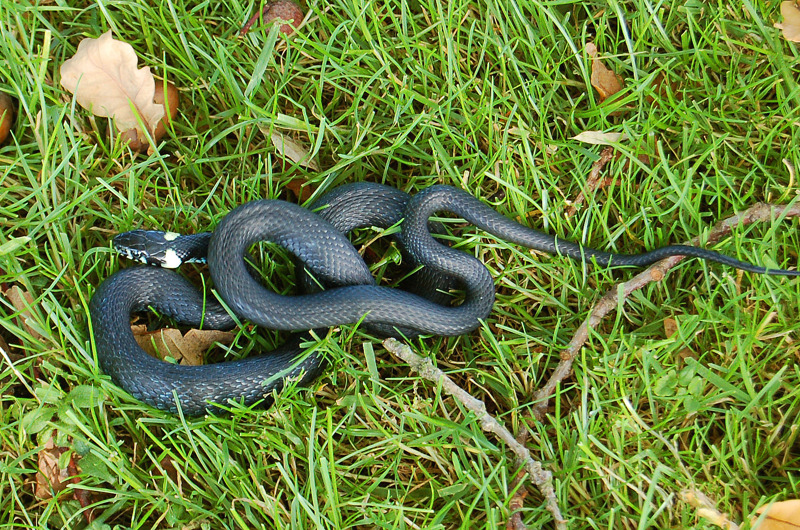
The grass snake is the most common snake here at Bøtø – although we also have adders. You can always recognize the grass snake by the two yellow patches on the back of its neck; if these yellow patches are absent, then it is an adder. A grass snake is not venomous, unlike the adder, but you still should not try to catch it, as you might be mistaken and pick up an adder instead – and the grass snake can also bite.
Grass snakes often lie basking on the banks of lakes or ditches. They do this to warm up – quite literally. The grass snake is what we call cold‑blooded, meaning it cannot produce its own body heat. When disturbed, it often flees into the water, where it is rarely pursued. Grass snakes often stay close to water because their favorite food is frogs.
In winter, the grass snake hibernates – it sleeps. From late March it emerges again, and in March and early April, you may be lucky enough to see large clusters of grass snakes lying together and basking in the sun. You can see the grass snake in the forest until October, when it returns to its underground den.