Kamikaze pilots
Kamikaze pilots
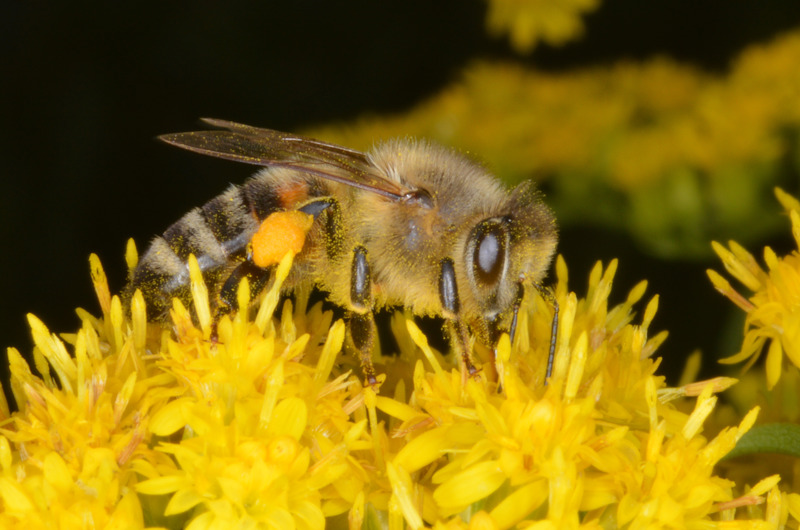
Honey bees are easy to recognise. They are small, with dull brown and gold stripes. They have quite small eyes which are, on the other hand, hairy! - and a pair of large pollen receptacles on each leg, full of pollen grains to take home to the hive. Honey bees don’t live in the wild in Denmark, but many people keep them as domesticated animals, so you can therefore find them in most nature areas in Denmark. Many people think of honey bees affectionately – especially if there aren’t too many of them in the same place at once – but don’t forget that they can sting, even though it’s more dangerous for them than their victims.
A honey bee that’s going to sting is on a suicide mission. When it stings, the sting apparatus stays in the wound, so when the bee tries to pull away, its abdomen is pulled apart. The sting and venom glands stay in place and will keep pumping venom for several minutes if it isn’t removed.
If you find a flowering bush filled with honey bees, you’ll probably also find its number one enemy – the bee wolf – a wasp that is specialised in hunting and killing honey bees, which it feeds to its young.