The larva hunter in the sand
The larva hunter in the sand
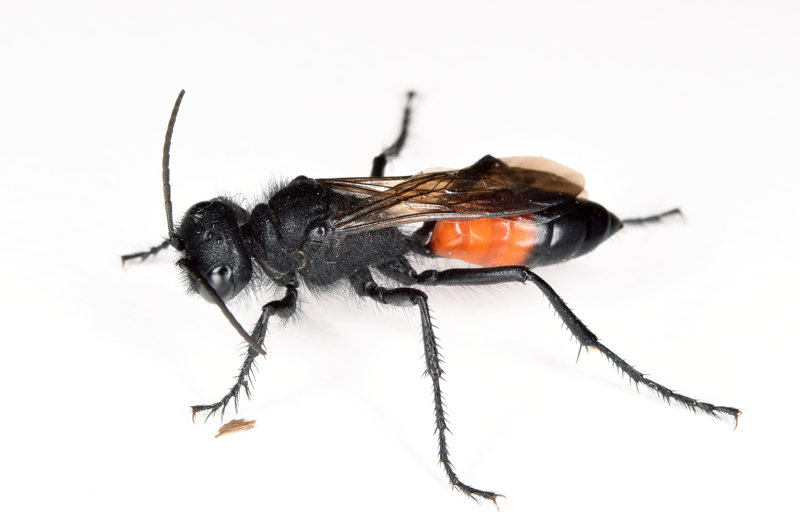
If you find a peaceful spot on a nice and sandy forest path, and sit down beside it, and have a bit of patience, then maybe you’ll experience something very interesting. Sooner or later, a fairly big, black and slender wasp with a red stripe on its abdomen may show up. It might come flying in, but it may also be walking – dragging a large caterpillar behind it. This is a red-banded sand wasp, and it is busy looking after its young. It starts by digging a tunnel into the ground, where it will raise its young, and this is a difficult process. First, it has to catch a caterpillar, which it paralyses with a sting, and then flies or drags it back to the hole. The caterpillar is pushed down, the wasp lays an egg on it, and then flies out to find more caterpillars, which will be food for the wasp larvae when they hatch. If the caterpillars are big, then there only needs to be one or two to provide enough food. If they are small, then there needs to be five or six of them.
Every time the wasp leaves its hole, it shuts the entrance. Try to stay seated and watch what it does. Some wasps use a stone as a hammer to press the sand at the entrance together, so others can’t see it. Others can’t be bothered using a hammer. What does the wasp that you found do?