Yew
Yew
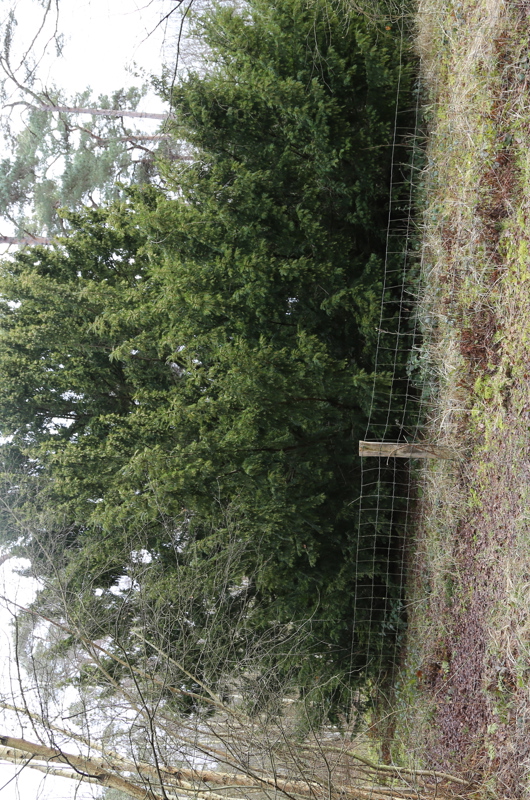
Yew trees can be identified by their soft dark-green needles and their bright red berries. They grow here and there, as large bushes or small trees and there are usually not many growing together. Their unusual way of growing is due to their seeds being dispersed by birds, who love the beautiful red berries. The seeds can easily cope with a trip through a bird’s digestive system, so they usually end up dropped in a different place in the forest – together with a little blob of fertiliser.
On the other hand, humans, and actually all other mammals, need to treat the yew with some caution. Apart from the thick, red, juicy layer around the fruit, all other parts of the tree are poisonous. This includes the seeds, bark, needles and even the wood. Yews are especially poisonous for horses, and attempts have been made to eradicate them. The poison in yew trees isn’t, however, just a bad thing. In small doses it can be used to treat some types of cancer.
There is a very large yew tree in Bøtø forest. A fence has been built around it so that animals can’t eat it.