Scots pine
Scots pine
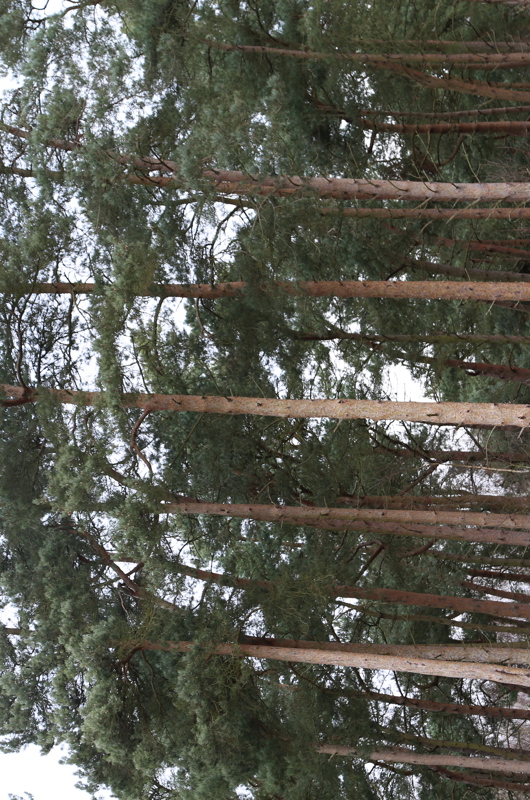
The Scots pine is one of the most widespread and well-known trees in Denmark. It’s particularly good at growing in sandy and poor soils, where other trees have difficulties thriving. Even though Scots pines can be quite tall – up to 30-40 metres, they are usually smaller. It isn’t very hard to identify a Scots pine from the other conifers. Old trees have very beautiful reddish-yellow bark, and the needles on Scots pines are always in pairs – on fir and spruce trees the needles are always individual.
In the spring, when the trees start to come alive again after the winter, you can often see on young pine trees, where the bark isn’t too thick, that the trees develop some elongated soft bumps under the bark. This is the trees’ sap (resin) which has started to rise up in the trunks, and if you scratch a little hole in one of these bumps, you’ll be hit by the most amazing smell of fresh resin.
The tree’s pinecones are quite small, triangular and hard as stone. They are attached to the tree for several years, until the seeds are mature. They often fall to the ground if the branch breaks in the wind. You can make yourself a nice collection of pinecones from different conifers. They last a long time and there is a good variety of different types. With a bit of practice, you can get to know the different trees just by looking at the pinecones.